

Affiliate Links
These are affiliate links. If you purchase through these links, we may earn a commission. This does not affect the price you pay. We only recommend products we trust. Your support helps us keep creating valuable content.



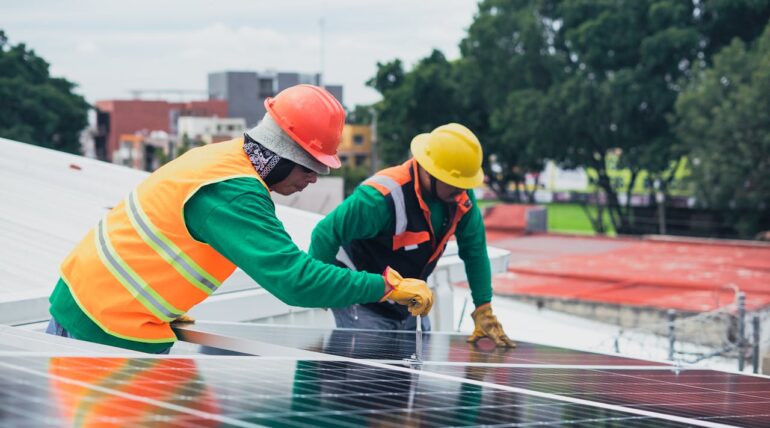
For the diligent homeowner or forward-thinking business, solar is a sound investment. Yet, a disheartening reality often emerges a few years after installation: the energy production doesn’t quite match the promised projections. This drop-off isn’t always obvious; it’s a subtle, invisible drain that compounds over time, eroding your return on investment. At SolarFlicker, we call this the Invisible Drain, and tackling it is the core mission of our forensic diagnostics service.
The issue isn’t typically catastrophic failure, but rather systematic underperformance rooted in factors beyond standard visual inspection. Standard maintenance only addresses surface issues like debris or loose wiring. A true Forensic Performance Audit delves into the complex electrical and physical characteristics of the array.
Unmasking the Culprits of Lost Watts
The common culprits behind the Invisible Drain require specialized tools to identify:
-
Micro-Cracks and Cell Degradation: These tiny fractures in the photovoltaic cells are invisible to the naked eye, often caused by thermal stress or improper handling during installation. Over time, these cracks become “hot spots” where resistance builds, severely limiting power output. We use high-resolution thermal imaging (IR) and electroluminescence testing to literally map these damaged areas, panel by panel.
Affiliate Links
These are affiliate links. If you purchase through these links, we may earn a commission. This does not affect the price you pay. We only recommend products we trust. Your support helps us keep creating valuable content.
-
Inverter Clipping and Voltage Mismatch: This is a surprisingly frequent and costly error. If your inverter is undersized relative to your array’s peak output capacity, it “clips” or discards excess energy during the sunniest hours of the day. Conversely, a poor voltage match between the panels and the inverter can constantly compromise efficiency. Our analysis utilizes I-V Curve Tracing, providing a detailed electrical signature that reveals these subtle, costly engineering flaws.
-
The Shadow Effect Multiplier: Even a slender shadow from a vent pipe or a neighboring tree branch can drastically reduce the power output of a string of panels in a conventionally wired system. We quantify this loss through 3D shadow analysis and recommend remediation strategies using Module-Level Power Electronics (MLPE), ensuring the failure of one panel doesn’t compromise the entire array.


The SolarFlicker Solution: Optimization Over Replacement
Many companies default to expensive panel replacement when troubleshooting. SolarFlicker focuses on optimization. Our audit provides an actionable, data-driven report that identifies the exact component or design flaw responsible for energy loss.
For example, correcting an inverter setting or replacing a single faulty microinverter based on our data is significantly cheaper and faster than a major system overhaul. We turn your system from an average performer into an optimized asset, often recovering 10% to 20% of lost potential energy yield.
Ultimately, your solar investment is only as valuable as the power it generates. If you suspect your system is underperforming, relying solely on utility monitoring data is not enough. You need the expertise to look inside the system. Choosing a forensic audit means taking control of your energy production and guaranteeing that you are, in fact, maximizing every ray.
Affiliate Links
These are affiliate links. If you purchase through these links, we may earn a commission. This does not affect the price you pay. We only recommend products we trust. Your support helps us keep creating valuable content.


